
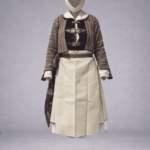
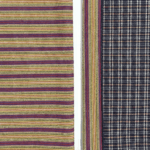
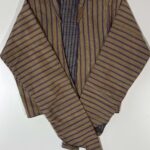
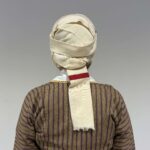
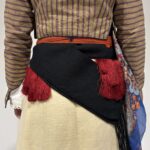
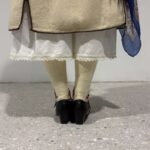
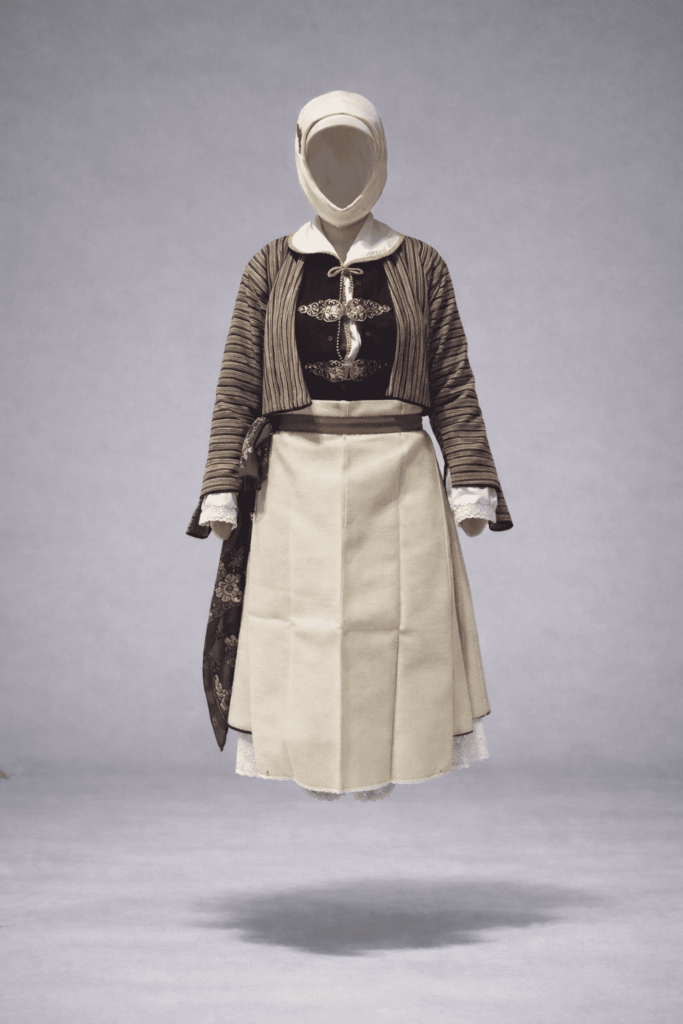
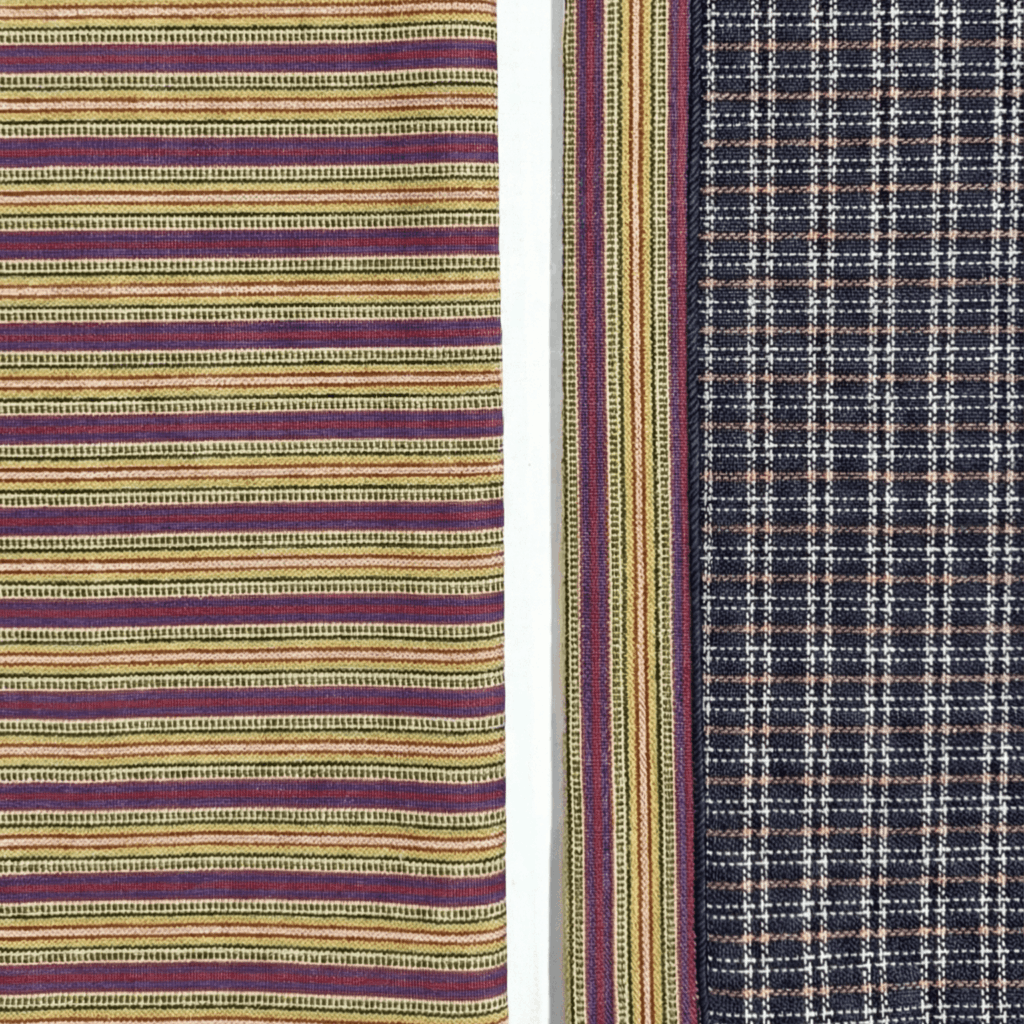
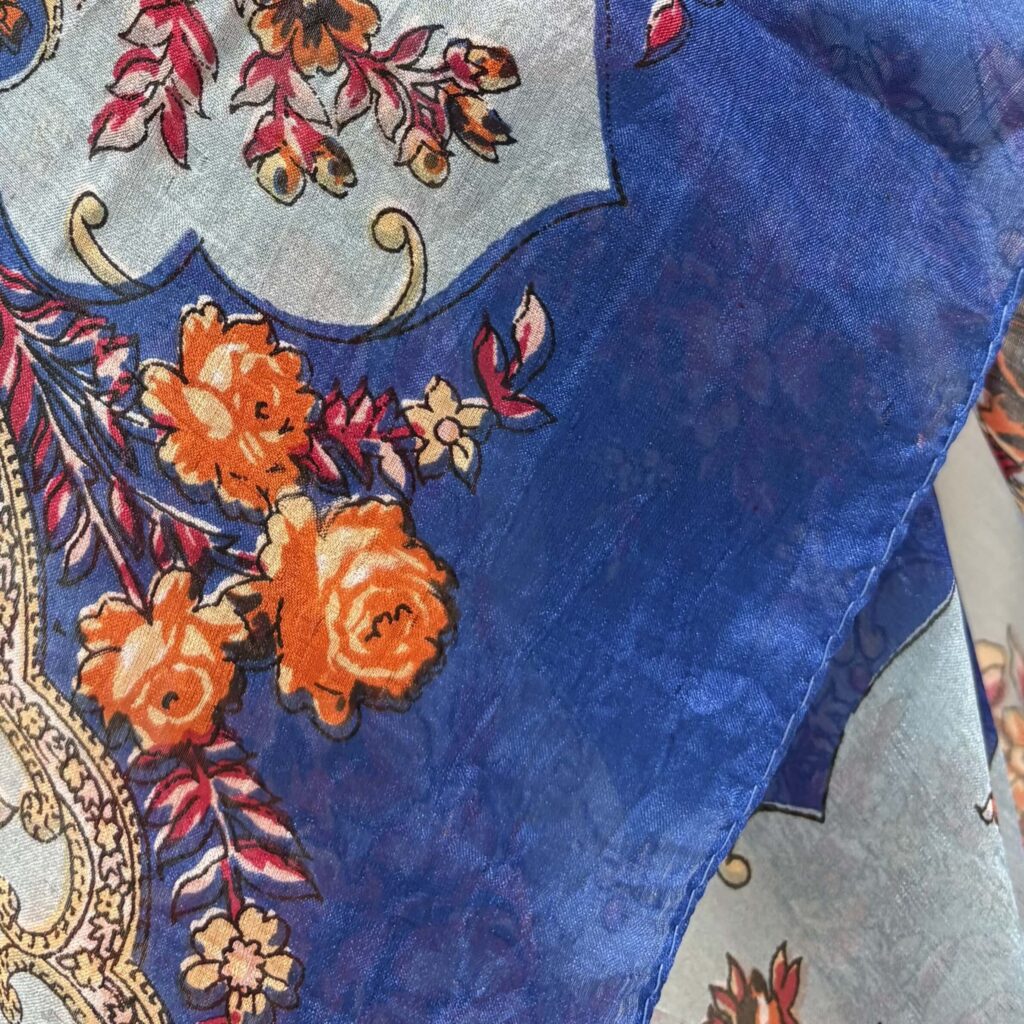
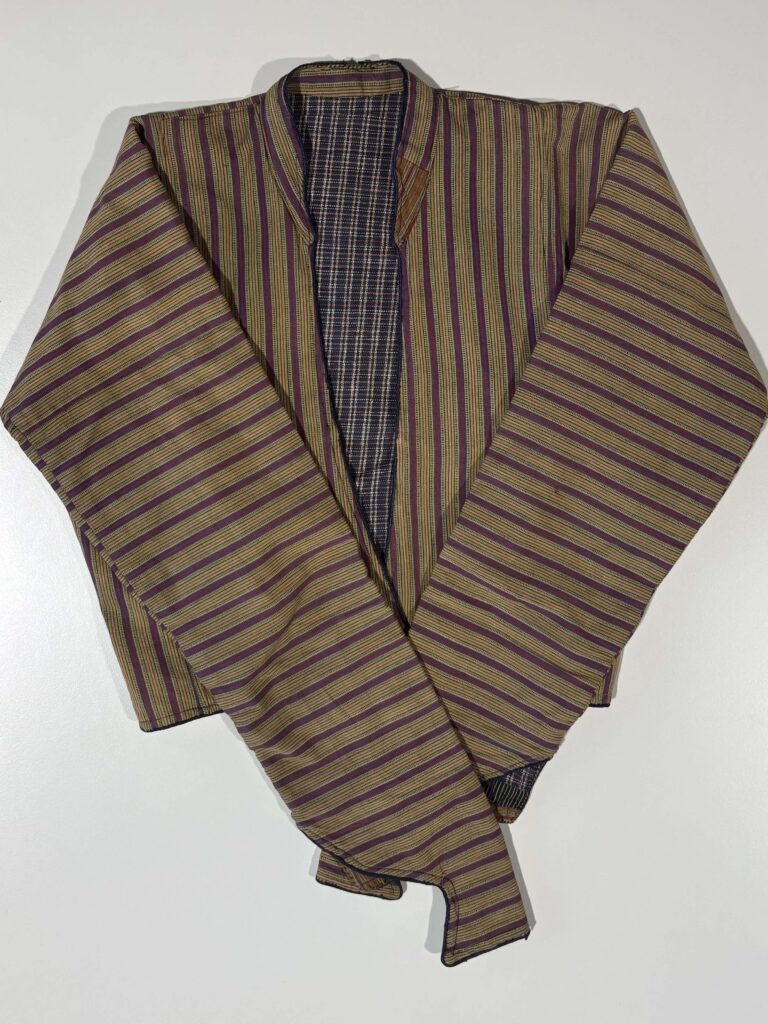
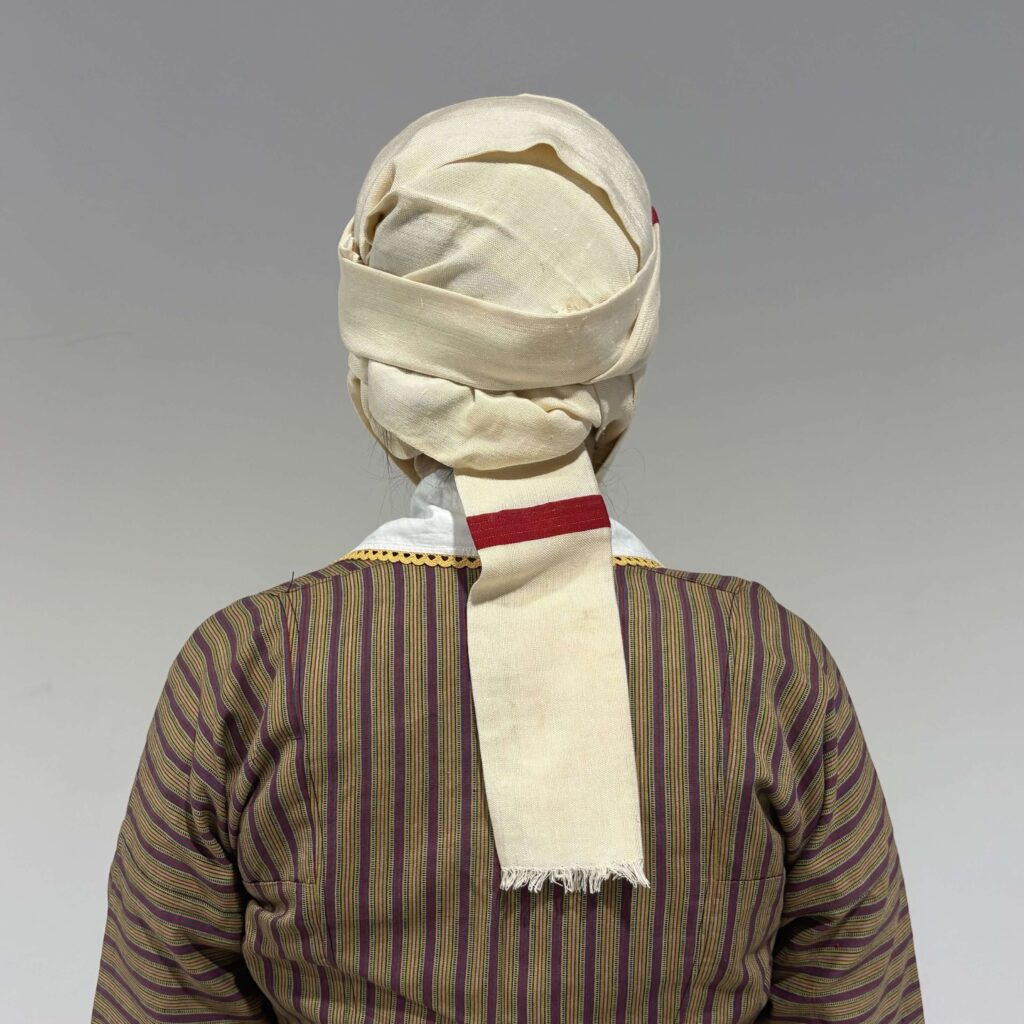
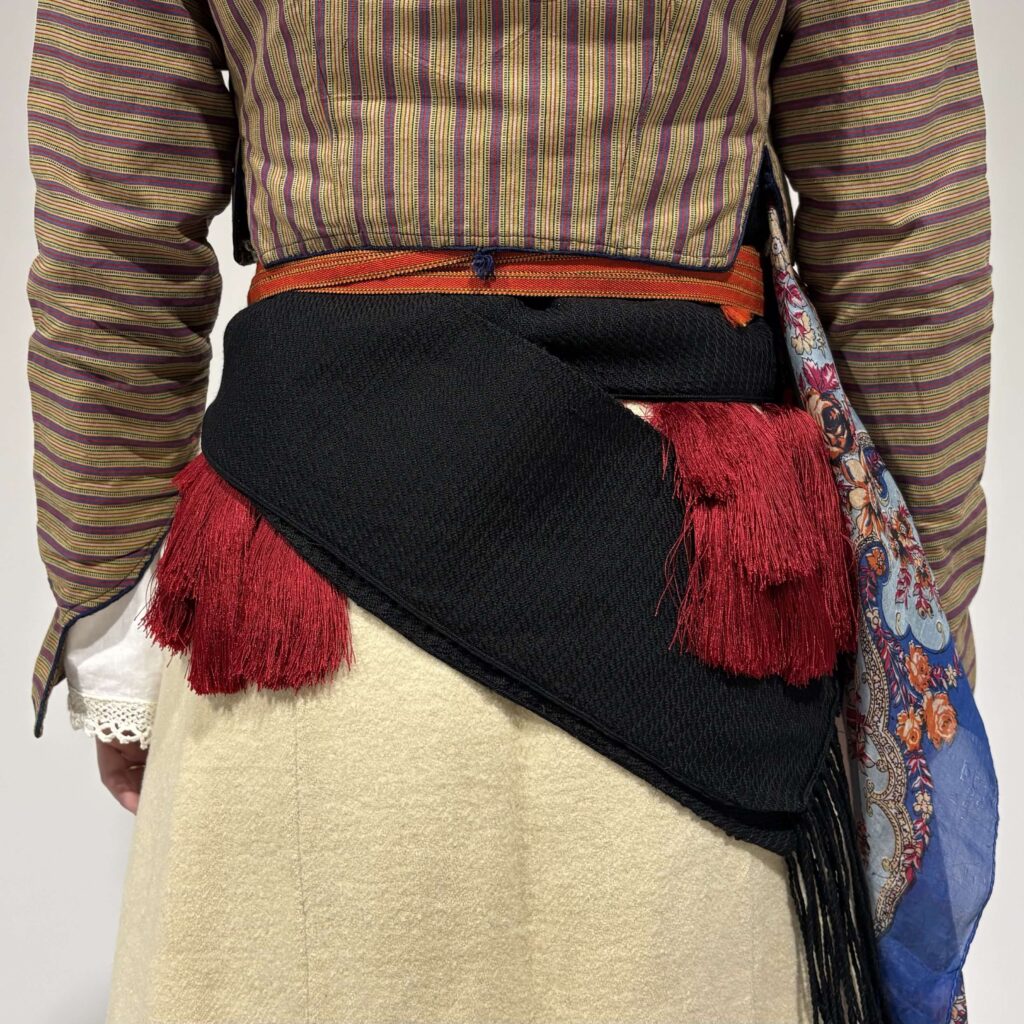
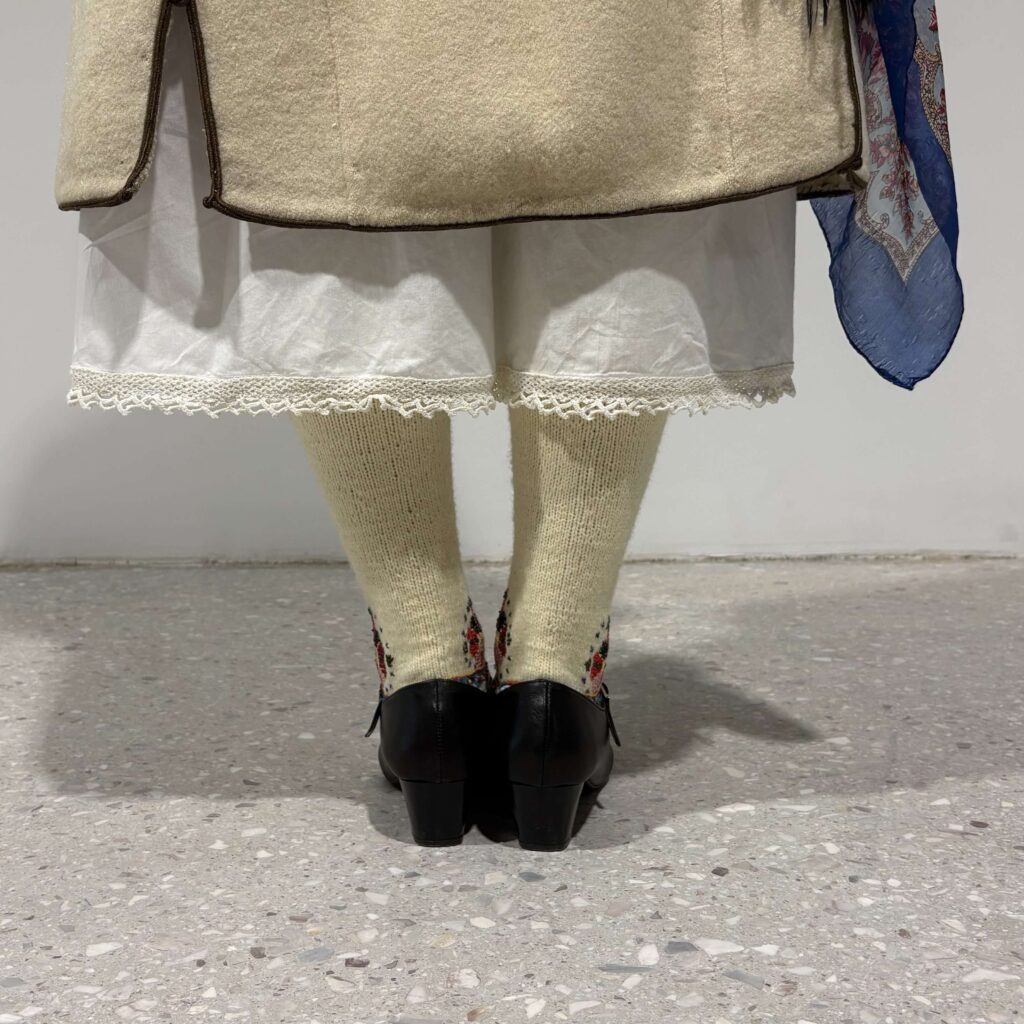
A casual and practical everyday costume of Pogoni, Epirus was shaped by movements required for work, field tasks, and durability and the rhythms of daily mountainous life. Composed of chemise, overdress, an apron, waist sash, woolen socks and tsarouchia, or leather shoes. A cotton or wool headscarf crowns the ensemble which requires special technique and many meters of fabric to be tied correctly and acquire its characteristic volume.
The layering begins with the poukamiso, a long cotton or linen chemise worn closest to the body, providing comfort and protection, and continues with the sayas or simple overdress, typically wool or cotton, whose dark, earthy tones reflect the practical needs of the region. The silhouette is grounded by a woven wool sash tied at the waist, securing the garments while allowing ease of movement, and completed with a plain apron that shields the dress during work. A modest headscarf, tied simply around the head, replaces elaborate adornment, emphasizing utility and modesty with knitted wool stockings and simple leather shoes or tsarouchia completing the costume thus reflecting the agrarian lifestyle of the region.This was worn daily for practicality and modesty, without coins or metal adornments.